
Introduction
Professional networking depends on making a useful connection and making it easy for people to follow up. Traditional paper business cards remain familiar, but contact details can change, cards can run out, and information often has to be entered into a phone manually. NFC digital business cards offer another option: a physical card that can open a digital profile on a compatible smartphone with a tap. For professionals and businesses in Qatar, this approach can support networking at meetings, conferences, exhibitions, client visits, and everyday business interactions. The physical card provides a simple introduction, while the digital profile offers more ways to connect.
How Does an NFC Business Card Work?
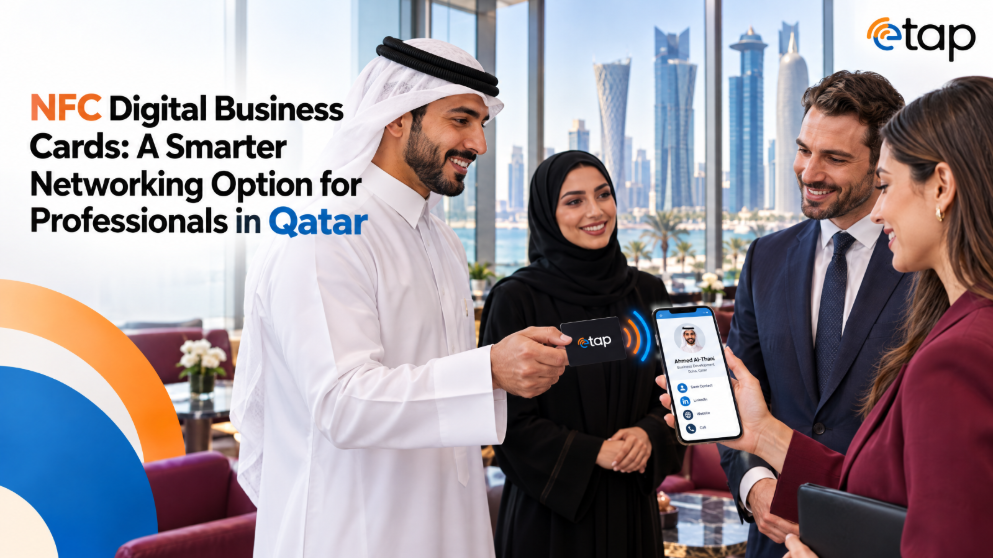
An NFC business card contains a small NFC tag that stores or points to information. In many business-card applications, the tag contains a URL. When someone taps the card with a compatible phone, the phone reads the tag and can open the linked profile or landing page. That profile may include a person’s name, role, phone number, email address, company website, LinkedIn profile, WhatsApp link, portfolio, or booking page. The experience depends on the profile platform, phone settings, and device compatibility, so test the card with the types of phones commonly used by clients and colleagues.
The Advantage of an Editable Digital Profile
One practical benefit is that digital information can often be updated without replacing the physical card. If a phone number, job title, website, or social profile changes, the linked profile can be revised while the card continues to point to the same destination. This can be useful for sales teams, consultants, founders, property professionals, and others whose contact details or services may evolve. A shared profile format can also help an organization keep employee information consistent, provided it has a clear process for maintaining each profile.
Useful at Events and Meetings
At a conference or exhibition, people may meet dozens of potential contacts in a short time. An NFC business card can reduce the steps needed to open a profile and choose how to connect. Rather than typing a long website address, the recipient can tap the card and select a relevant contact option. A card is most effective when the profile is concise and mobile-friendly. Put the most useful actions near the top, check that links work, and avoid adding too many buttons. Clear company details and a straightforward call to action can help the recipient remember the conversation.
NFC and QR: A Flexible Combination
NFC works well for compatible devices, while QR codes offer a visual alternative that can be scanned with a camera. Including both can make a digital business card more accessible. It also gives the recipient an option if NFC is disabled or unavailable on their device. Security and privacy should be considered as well. A business card should share only information the owner intends to make public. Avoid placing confidential data directly on a tag, and use a profile or website that can be maintained and secured appropriately.
Choosing a Card for Your Brand
When selecting a card, consider the material, finish, design, and profile experience. PVC can be a practical everyday option, while metal cards may suit a premium brand presentation. Whatever the material, ensure that the NFC tag works reliably in the finished product and that the profile opens as expected. Professionals can explore etap’s NFC digital business card collection to review options for smarter networking. Before an event, test the card, keep the profile current, and have a QR or standard contact-sharing alternative available.
Conclusion
NFC digital business cards combine a physical introduction with a flexible digital profile. They can simplify contact sharing, reduce the need to reprint cards when details change, and give recipients convenient ways to follow up. For professionals in Qatar, the best result comes from pairing reliable NFC functionality with a clear profile and thoughtful networking habits.